Wet Area Zones
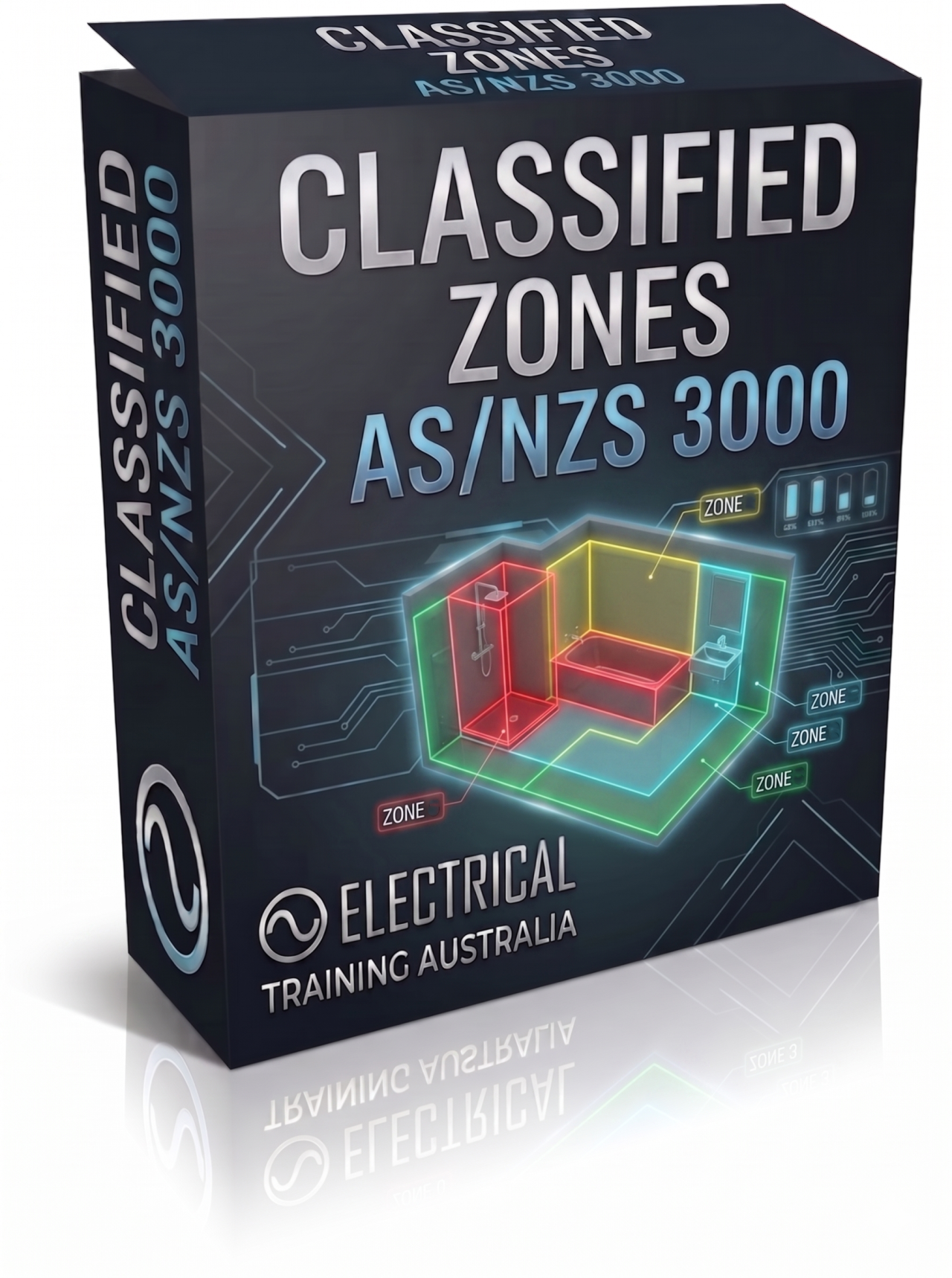
Course Summary
Mastering Section 6 Damp Zone Compliance
10 Part Series
Electricity and water don’t mix, and getting the zones wrong is a lethal mistake.
This course is your high-impact guide to Section 6.
It strips away the jargon to ensure every installation, from a domestic shower to a commercial meat works—is 100% compliant and safe.
What You’ll Master
Lethal Physics: Why it only takes 7mA to stop a heart and how wet skin obliterates electrical resistance.
Zone Boundaries: Navigate the complex spatial arcs (0.15m to 2.4m) for baths, showers, and the new 40L capacity threshold for sinks.
Pool & Spa Revolution: Master the updated 680L spa threshold and the mandatory new accessible bonding connection points.
Extreme Environments: specialized standards for 170°C saunas, sub-zero refrigeration rooms, and high-pressure IPX6 washdown zones.
The "No-Earth" Rule: Understanding why Zone 0 luminaires must never have a protective earth.
Part 1 - Zones IP Rating and Shock
This course breaks down the critical updates to Section 6, focusing on the lethal intersection of electricity and water.
You’ll explore the science of body resistance—where as little as 7mA can be fatal—and learn how moisture dramatically lowers the body’s natural defences.
The curriculum covers the clauses for essential IP Rating (IPX5 to IPX7) requirements for specific zones, and mandatory protective measures for high-risk areas like pools, saunas, and communal showers.
Stay compliant and ensure safety by mastering the precise installation standards for any environment where water is a factor.
Part 2 - Zones Baths and Showers
This session breaks down the critical boundaries of Zones 0, 1, 2, and 3 for baths, showers, and water containers, highlighting the latest updates to Section 6.
You will learn how to identify zone limits based on fixed plumbing connections and how barriers—including glass, walls, and curtains—can strategically reduce these high-risk areas.
The curriculum covers essential safety exemptions, such as equipment recessed behind ceilings or sealed within IPX4-rated enclosures, and provides a deep dive into industrial safety washdown facilities.
By mastering these spatial arcs and radius measurements (from 0.6m to 2.4m), you’ll ensure every installation meets the rigid compliance standards required for Australia and New Zealand.
Part 3 - Zones Other Fixed Water Containers
This module details the critical regulatory shifts regarding "Other Fixed Water Containers" and the placement of electrical accessories in high-moisture environments.
A key takeaway is the updated threshold for container capacity—reduced from 45L to 40L—which triggers stricter clearance requirements for socket outlets and switches.
You will learn to navigate the spatial requirements for laundries and kitchens, specifically the 0.15m and 0.5m zones, and understand the mandatory 0.3m minimum floor clearance for any wet area installation.
Part 4 - Swimming Pools & Spas: Section 6 Safety Standards
This session covers the critical zone classifications for swimming pools, paddling pools, and spas, emphasizing the latest updates to AS/NZS 3000.
The most significant change is the capacity threshold for spas, which has increased from 500L to 680L.
You will learn how to accurately measure zones from the water container's edge, not the outer structure, and how to account for "occupiable surfaces" like diving boards and slides which extend the safety radius vertically and horizontally.
Part 5 - Pool Equipotential Bonding
- This module covers the high-priority changes to AS/NZS 3000 regarding equipotential bonding and stray voltage protection in pool and spa environments.
- There is significant attention to the mandatory Bonding Connection Point, a dedicated, accessible terminal that must be labelled at the main switchboard to ensure all conductive elements can be safely bonded and inspected post-construction.
Part 7 - Fountains Water Features
- This session defines the electrical safety requirements for fountains and water features, specifically where the water depth is 30cm or more. For shallower decorative features, these strict zone rules do not apply, but for deeper installations, the focus is on mitigating the extreme risk posed by reduced body resistance in water.
Part 8 - Saunas
Sauna installations shift the focus from water submersion to extreme thermal stress.
Compliance is based on proximity to the sauna heater and the vertical heat gradient within the room.
A key distinction in saunas is that zones extend through to the cold side of the thermal insulation, meaning the regulations cover wiring hidden behind the internal walls and ceiling.
Part 9 - Refrigeration Rooms
This module covers the specialized electrical requirements for refrigeration rooms—defined as any cold storage area large enough to be entered by a person.
The primary risks in these environments are extreme low temperatures and the accumulation of moisture due to condensation, both of which can compromise standard insulation and earthing systems.
Part 10 - Sanitization and Washdown Areas
This module addresses high-moisture environments such as food processing plants, dairies, greenhouses, and commercial car washes.
In these locations, the primary risk is the frequent use of pressurized water and corrosive cleaning chemicals, which can compromise standard electrical equipment.

Alan Williams
Alan is an AS 3000 Subject Matter Expert and trains on AS 3000 and 17 related Electrical Standards.
He has contributed to 4 Standards Committees and has been a Director of the Institute of Electrical Inspectors for over 10 years and was the Chairman for 1 year. He provides expert leadership to electrical professionals across Australia.
Alan has 40 years of experience across many aspects of the electrical industry, including
- Heavy Industry (QAL & Gladstone Ports)
- High Voltage Switchyard Construction (Boyne Island)
- Maritime Ore Carrier Ships (Gladstone)
- Solar Farms & Renewables
- Transformer & Motor Manufacturing
- Domestic and Commercial installations
- and Aeronautics electrical maintenance.
As a professional trainer, Alan has run conferences, seminars, online training and onsite workplace training for thousands of electrical engineers, electricians, contractors and electrical workers.
Alan’s dynamic and engaging training, backed by his wide range of electrical experience as an electrician, contractor and Inspector, helps electrical workers across Australia and New Zealand understand and stay up to date with the AS3000 Wiring Rules, 17 related Electrical Standards and their associated changes.