1912 General Rules for Wiring
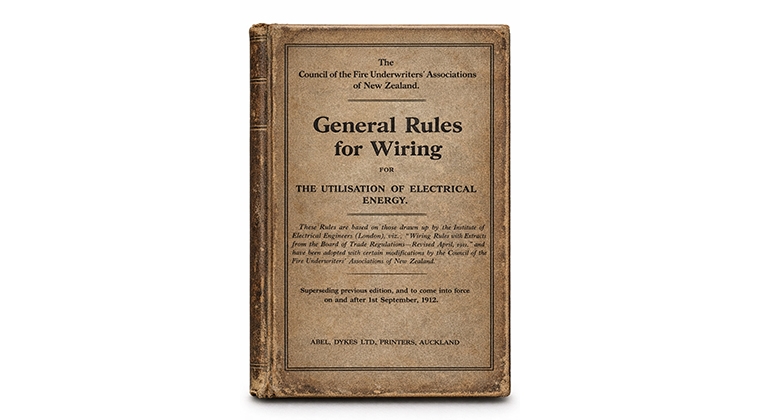
Step into a time capsule of electrical history with the 1912 General Rules for Wiring
Course Summary
Step into a time capsule of electrical history with the **1912 General Rules for Wiring**
Long before the modern AS/NZS 3000 standards we use today, the "Fire Underwriters' Associations of New Zealand" governed the industry with a set of rules that seem almost alien to the modern contractor.
This isn't just an old book; it’s a blueprint of the birth of electrical safety, back when electricity was still a "new-age" luxury and the primary goal was simply to stop buildings from burning down.
Why you need to see this:
* **The "Wood Casing" Era:**
Imagine a world where running cables through grooved wooden molding was standard practice.
This book details exactly how to install "wood casing" and the specific requirements for keeping your active and neutral wires in separate timber channels.
* **A World Without Color-Coding:**
Forget Red, Black, and Green/Yellow. In 1912, "identifying" a cable often meant looking at the type of braid or the physical position of the conductor.
* **The 6-Amp Lighting Limit:**
In an era of early incandescent bulbs, the rules for sub-circuits were vastly different. You’ll see how they managed "low pressure" systems (up to 250 volts) with safety mechanisms that pre-date the circuit breakers we trust today.
* **Cinematographs & Arc Lamps:**
The book includes specialized sections for technologies that have long since vanished from the general rules, providing a fascinating look at how the earliest "high-tech" appliances were regulated.
* **"Vulcanized Rubber" Standards:**
See the rigorous (and manual) tests required for early rubber and paper insulation—materials that many of us still occasionally find behind the walls of century-old heritage homes.
Whether you are a seasoned sparky who has seen it all or an apprentice just starting out, looking through these rules will give you a whole new appreciation for the tools, materials, and safety standards we have today.
**Take a look at how far we’ve come—from wooden grooves and silk-covered flex to the digital, RCD-protected world of 2026.**
Course Curriculum

Alan Williams
Alan is an AS 3000 Subject Matter Expert and trains on AS 3000 and 17 related Electrical Standards.
He has contributed to 4 Standards Committees and has been a Director of the Institute of Electrical Inspectors for over 10 years and was the Chairman for 1 year. He provides expert leadership to electrical professionals across Australia.
Alan has 40 years of experience across many aspects of the electrical industry, including
- Heavy Industry (QAL & Gladstone Ports)
- High Voltage Switchyard Construction (Boyne Island)
- Maritime Ore Carrier Ships (Gladstone)
- Solar Farms & Renewables
- Transformer & Motor Manufacturing
- Domestic and Commercial installations
- and Aeronautics electrical maintenance.
As a professional trainer, Alan has run conferences, seminars, online training and onsite workplace training for thousands of electrical engineers, electricians, contractors and electrical workers.
Alan’s dynamic and engaging training, backed by his wide range of electrical experience as an electrician, contractor and Inspector, helps electrical workers across Australia and New Zealand understand and stay up to date with the AS3000 Wiring Rules, 17 related Electrical Standards and their associated changes.